From infancy and toddlerhood to pre-kindergarten, these formative years bring extraordinary growth as our children discover who they are. But this is just the beginning of their development. Today, we are taking a close look at Rothewood Academy’s holistic approach to early education and what this could mean for your child. From learning to communicate and connect with their peers to developing independence, building confidence and understanding their place in the world, Rothewood is committed to supporting our children to lay the foundations for how they will learn, relate to others and navigate the world around them.
For families, early learning is also much more than finding a safe and nurturing place for their children to spend the day. Early childhood educators become an important bridge between home and the wider world. They are among the first people outside a child’s family to help children navigate relationships, explore new ideas, solve problems, express their feelings, make choices and discover themselves as capable learners, which is why Rothewood Academy is committed to helping our littles do this on their terms so they can take ownership of their own education.
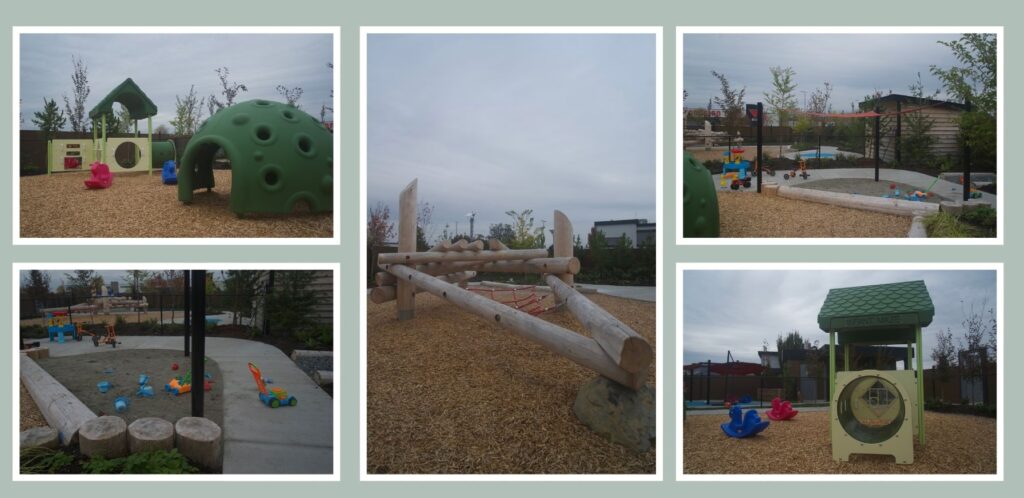
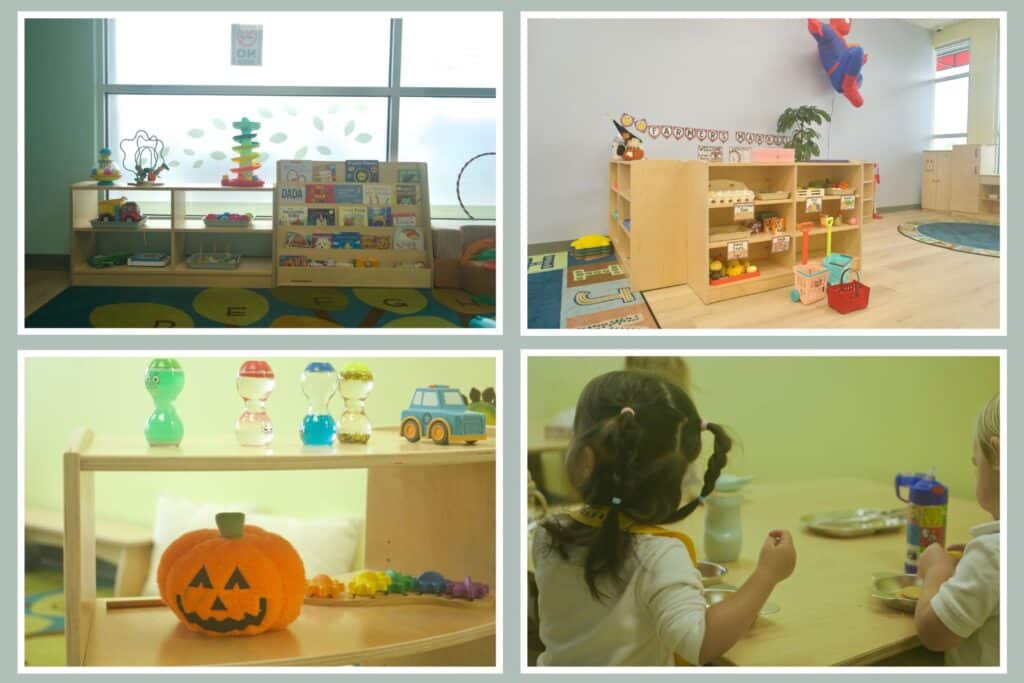
Located in Tsawwassen Commons, on the traditional territory of the Tsawwassen First Nation, the new Rothewood Academy South Deltais ready to serve its community. The 11,000-square-foot purpose-built facility feels warm and inviting, from its bright, modern architecture and thoughtfully designed learning spaces to its expansive 7,500-square-foot natural outdoor playground.
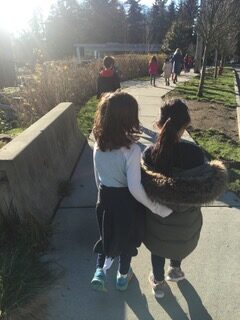
Learning doesn’t stop at the classroom door. Outdoors, children have space to explore, experiment, move and discover through play in nature.
Today, we have been invited through these beautiful doors to learn about this unique early learning philosophy, reflected in its Head, Hands, Heart approach, which is based on the belief that children learn as whole people. Their minds are busy questioning and discovering (Head); their hands are exploring, creating and experimenting (Hands); and their hearts are developing relationships, empathy, confidence, resilience and a sense of belonging (Heart).
We spoke with Vice Principal Shereen Williams about what this looks like in the everyday life of an early learning environment, from the role of intentional play and curiosity to the importance of giving children space to struggle, all while they experiment with how to find their own solutions.
INTERVIEW WITH SHEREEN WILLIAMS, VICE PRINCIPAL OF ROTHEWOOD ACADEMY SOUTH DELTA
BC PARENT: Parents often visit several centres before choosing one for their precious littles. What do they usually notice that feels different at Rothewood?
SHEREEN:I believe one of the first things families notice is that Rothewood feels very intentional. Everything from the environment to the way educators interact with children in our care has a purpose. We want children to feel that they belong, that they are capable, and that their ideas matter. We don’t want a child to simply be cared for—we also want them to feel known, heard, and understood. Our educators take the time to appreciate each child’s personality, interests, strengths, and individual way of learning.
BC PARENT: What feedback do you hear most often after a child has been enrolled for a few months?
SHEREEN:We are a new centre, but based on our many other locations, one of the things we hear most often is how much a child’s confidence has grown, and we are so looking forward to sharing in creating that magic here at our new South Delta location. Parents may initially talk about academic or developmental progress, but after a few months they often notice characteristics like their child becoming more independent, communicating more confidently, trying new things, or talking enthusiastically about what they did at school. We also look forward to hearing that children begin to see themselves as learners, creators, and researchers when they come home wanting to share what they have discovered, built, questioned, researched, or created.
BC PARENT: This all sounds amazing, and we’ve certainly witnessed this magic in the making here today during our school visit to your location. What worries tend to fade once families settle in?
SHEREEN: Many parents naturally worry about whether their child will transition, adjust, make friends, feel comfortable, or be ready for the next stage of their learning. Those concerns often fade quickly when families see how we connect with their children. This starts by taking the time to learn about and understand each child individually. We are most proud of making this investment to truly understand how every child and every family is special in their own way. We support each individual in the family unit in the way that works for them so we can work together collaboratively. We support families and children where they are by encouraging and supporting them toward their next steps in learning.
BC PARENT: Can you explain to us what your three pillars: HEAD, HANDS, HEART mean in the daily practice of your school.
For us, Head, Hands, and Heart represents the whole child. The three work together in a beautiful way as children learn through their relationships, their bodies, their experiences, and their emotions.
-Shereen Williams, Vice Principal of Rothewood Academy South Delta
Head is about thinking, questioning, problem-solving, communicating, and developing a love of learning. Head also represents intentional learning. This happens when children begin to inquire about the world around them, using their critical-thinking skills to make thoughtful connections and draw their own conclusions within intentionally created environments.
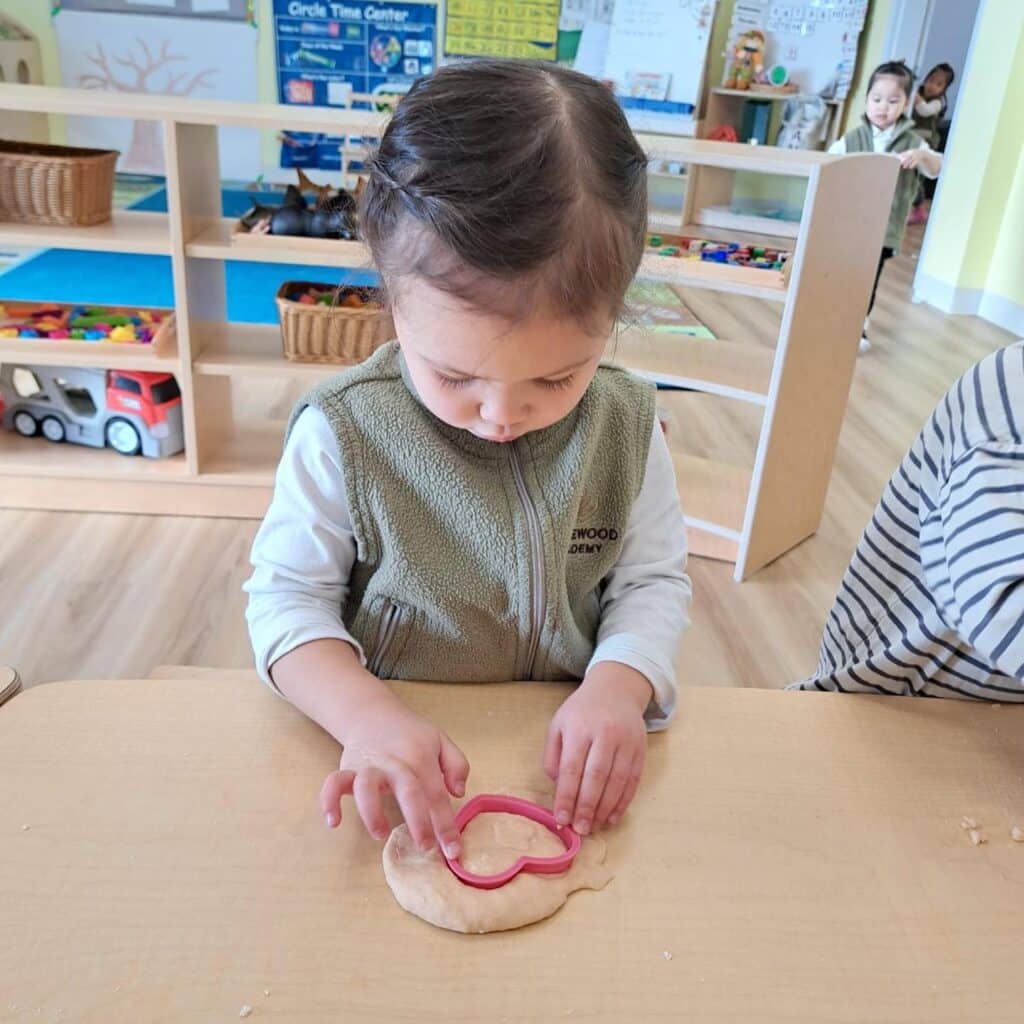
Hands are about doing. Children need opportunities to build, create, manipulate, experiment, move, explore, and develop practical skills through real experiences.This is where our Montessori curriculum and practices come into play.
Heart is about relationships. It is where children begin to develop empathy, confidence, belonging and resilience while learning to understand themselves and others. Heart is also about connecting to others. This includes building relationships that we sometimes help foster, helping them grow from within and with the world around them.
BC PARENT: If a parent watched their child at Rothewood for a full morning, what would they see that reflects the Head, Hands, and Heart without anyone explaining it to them?
SHEREEN: Let’s start with Head. They might see a child sitting with an educator, discussing why something happened or sharing an experience they need closure for. They might also see their child moving materials around to solve a problem. For Hands, this could also include creating something with their hands, researching ideas, or experimenting with something to answer a question that they have. And for Heart, this could include them helping a friend, expressing a feeling, or confidently asking for help, all while creating friendships and learning about the world we care for. They might also see that these things aren’t separated into individual lessons. We follow something called “The Rhythm of the Day.” This flexible guide to the day’s events helps us avoid interrupting their natural ability to learn as they explore and practice what interests them. Experiences and activities happen naturally throughout the day, making way for focused, motivated, engaged learners and creators.
BC PARENT: How do these three elements guide the everyday decisions teachers make?
SHEREEN:Before making a decision, educators can ask themselves: What is the child thinking? What can the child do? What does the child need emotionally and socially? How can I support the child in becoming an autonomous learner? The answers to these questions help us make informed decisions that support the whole child rather than focusing on just one area of their development.
BC PARENT: How important is learning through play at Rothewood, and why is it foundational to your approach?
SHEREEN:Play is fundamental because it is one of the most natural and powerful ways young children learn. But play at Rothewood isn’t simply about play. It is intentional play. Educators observe what children are interested in and drawn to, which helps them understand what they are learning through that experience. Once we understand this, we can look for opportunities to extend their thinking. Rothewood educators create a foundational environment that supports engagement and growth by scaffolding play. At Rothewood, the child is the teacher, the teacher is the teacher and the environment is the teacher. Setting up an intentional learning environment provides the foundation for children to bridge the gap between their natural curiosities and a powerful motivational learning experience.
BC PARENT: What does productive struggle look like for a child in your school?
SHEREEN: Productive Struggle is when a child encounters something that is challenging but achievable with time, experimentation, and support. For example, a child may be trying to build a bridge that keeps falling down. Rather than immediately fixing it for them, an educator might ask, “What do you think is making it fall?” or “What could we try differently?” The goal isn’t simply for the bridge to stand. The goal is for the child to experience the process of thinking, trying, failing, adjusting, and trying again.
BC PARENT: How do teachers decide when to step in and when to step back?
SHEREEN: Observation is key. If a child is engaged and working through a challenge, we may step back and give them space. We are there for gentle support and guidance if frustration becomes overwhelming. When our educators step in to assist, we do it in a way that the child continues to have autonomy in their learning. We may ask a question, offer a suggestion, give encouragement, or provide additional resources to help the child achieve a successful outcome. We do this intentionally by giving each child the space to ask their own questions, which allows them to reach the conclusions that they are seeking on their own.
BC PARENT: Can you share an example of a child learning something meaningful through play that surprised their educators?
SHEREEN: A great example might be children becoming fascinated with water during outdoor play. What begins as pouring and splashing can develop into conversations about floating and sinking, volume, prediction, measurement, and cause and effect.The educator may have planned a completely different activity, but the children’s curiosity creates an opportunity for much deeper learning. Once a child is content with their learning, they will intrinsically move to their next focus of choice. There is a magical beauty in watching a child demonstrate their eagerness to engage in their learning process. This type of learning never has a start or a finish; it’s fluid and continuous. That’s one of my favourite things about early learning: the most meaningful “curriculum” is the “curriculum” the children help us discover as we observe and stand by to support when needed or participate when invited into their activities.
BC PARENT: How do educators balance a well-planned day while still following a child’s curiosity?
SHEREEN:Planning provides the framework, but at Rothewood it doesn’t become the script. Planning is the support. Our educators plan intentionally every day around their developmental goals and interests using materials, experiences, and routines. At the same time, they remain responsive to what children show them through their interests and ideas. The plan only gives us direction; the children’s curiosity then helps us determine the journey.
BC PARENT: What a beautiful visual. So what happens when a child’s interest pulls learning in an unexpected direction?
SHEREEN:We follow the child’s lead when it creates meaningful learning. If children suddenly become fascinated by insects in the playground, for example, that might lead to observation, drawing, counting, storytelling, books, scientific questions, or conversations about caring for living things. The educator’s role is to recognize the learning opportunity and thoughtfully extend it. There may be multiple learning environments happening at once in a room. As children step in and out of each learning opportunity, they are inquiring, exploring, problem solving, creating, and reflecting.
BC PARENT: Where do you draw the line between freedom and guidance?
SHEREEN: That’s a great question. Children need freedom within boundaries. We give children meaningful choices, but those choices exist within a safe, respectful, and developmentally appropriate environment. Freedom doesn’t mean a lack of structure. We want children to experience independence while knowing that their educators are there to provide guidance, safety, and support.This also teaches them how to respect and even set healthy boundaries. And a big part of teaching our children how to respect these boundaries is by modelling this ourselves.
BC PARENT: Can you describe how learning might look different for three children in the same classroom?
SHEREEN: Three children can participate in the same experience and have completely different learning goals. For example, during a building activity, one child may be working on basic fine-motor skills, another may be exploring balance and problem-solving, while another may be designing a complex structure and explaining their ideas to peers. We set up the environment to provide endless learning opportunities and support growth. Rothewood educators will observe and document a child’s learning and support them with the tools they need to grow and develop their individual skills. The activity is shared, but the learning is always individualized.
BC PARENT: How does an early childhood educator adapt when one child is ready to move ahead, and another needs more time?
SHEREEN: We meet each and every child where they are. If one child is ready for more complexity, we extend the experience with new questions, materials, vocabulary, or challenges. If another child needs more time, repetition, modelling, encouragement, or a different approach, we provide that too. Equity in early learning doesn’t mean every child receives the exact same thing. It means every child receives what they need in order to grow. At Rothewood, our environment as the third teacher gives ALL children, at any developmental level, the opportunity to feel comfortable and supported as they grow and develop.
BC PARENT: How do you help children begin to take ownership of their own learning, even at such a young age?
SHEREEN:We give children choices and genuine opportunities to make decisions. We might ask, “What would you like to investigate?”, “How could we solve this?”, or “What do you think we should try next?” When children understand that their ideas have value, they begin to see themselves as capable learners rather than simply little people who are told what to do by the adults in the room. At Rothewood we are nurturing autonomous learners. When children know their thoughts and ideas matter and are supported, they become mighty learners.
BC PARENT: How is a Rothewood teacher’s role different from that of those in a more traditional early learning setting?
SHEREEN: We see the educator as a facilitator, observer, guide, and co-learner. They co-create as imaginers of their learning environments and the possibilities that they hold. Rather than always giving the answers, the educator creates opportunities for children to discover the answers for themselves. Together, the educator and the child become both co-learners and co-creators as the educator is constantly observing, listening, questioning, documenting, responding and reflecting. When the children and educator create a learning environment together, they form a partnership in which the educator and children take an educational journey together.
BC PARENT: This is a two-part question. Can you tell us what teachers at Rothewood Academy spend more time doing, and less time doing, than you might find in other early learning programs.
SHEREEN: I would say that building relationships is our number one priority. This includes building connections with families and the children in our care. We believe this is what sets everyone up for success. Having those meaningful conversations, observing children’s interests, creating purposeful environments, and extending children’s thinking form the foundation of what Rothewood educators do.
BC PARENT: What kind of educator truly thrives in the Rothewood environment?
SHEREEN:An educator who is curious, reflective, patient, creative, and genuinely interested in connecting with children and their families.We tend to bring on educators who don’t just follow a traditional academic curriculum, but those special educators who can create an intentional, inquiry-based learning environment.Someone who is comfortable saying, “I don’t know. Let’s find out together.”
The best educators understand that they are not just teaching children. They are also learning from and alongside them, and their colleagues as well.
Shereen Williams
BC PARENT: When a child leaves Rothewood, what matters more to you than academic skills?
SHEREEN:We want children to leave us with a strong sense of who they are as people first and learners second. We want them to be curious, confident, resilient, kind, capable, and willing to try. We also want Rothewood Academy children to feel accomplished and confident in who they are. Academic skills are important, but we believe the foundation underneath those skills matters most. When a child graduates from Rothewood, we want families to be able to reflect on their Rothewood experience and feel that they not only received the best support and care for their child’s learning, but also felt at home and connected to a bigger family.
BC PARENT: What inner qualities do you hope children carry with them into their next learning environment?
SHEREEN:Of course, a sense of autonomy and inclusivity. This happens when they develop their confidence, curiosity, empathy, independence and resilience through social-emotional learning. Most importantly, we want children to feel safe enough to believe that they can figure things out for themselves and ask for help when they need it. We want them to know that their ideas matter, and to have a strong sense of belonging. Our goal is for every child who walks through the doors at Rothewood to feel, along with their families, supported and nurtured. We want them to enter Kindergarten with the skills to handle setbacks and to ultimately thrive in all of their future learning environments. The qualities that we hope to instill in the children who attend Rothewood Academy today are the qualities that will carry them beyond their academic careers and into adulthood.
BC PARENT: How do you recognize success when it can’t be measured by milestones alone?
SHEREEN:We look for the small moments. That’s where the magic happens. For example, a child who previously wouldn’t separate from their parent is now taking that first confident step into the classroom. Or a child who once became frustrated quickly is now learning to try again. Or maybe a quiet child is feeling confident enough to find their voice. Another child might be helping another child. It’s the small moments that may not always appear on a developmental milestone checklist, but they tell us something incredibly important about a child’s growth and development. Those are the biggest wins for us. It’s the beauty of the small, everyday moments that we consider ours and their greatest successes!
BC PARENT: What is something Rothewood protects fiercely, even when it’s inconvenient?
SHEREEN: We will always adjust our schedule before compromising a child’s wants, needs and abilities. The child is the center of all our decisions. As early learning providers, we create individualized learning plans within a larger learning environment. This is how we are able to protect children’s sense of safety, belonging, dignity, curiosity, and individuality. We believe that children do not fit into a one-size-fits-all learning approach. We are inclusive to all individuals, and sometimes that means changing our approach, slowing down, or even having those difficult conversations and responding differently than originally planned. We protect our learn-through-play approach because we value educating the whole child through their Head, Hands, and Heart. Pushing out a curriculum and check-marking developmental boxes is not what we are about. Instead, we prioritize experiences and connections that foster inclusion. Even when it takes more time, we make decisions that respect the child’s developmental needs rather than choosing the quickest or easiest answer. We strive to help children become lifelong learners by providing early, positive educational experiences that inspire them.
BC PARENT: What will never be rushed at Rothewood?
SHEREEN: Relationships. We know connection is the key to what we strive to achieve for our families. We pride ourselves on taking the time to get to know families and their individual needs. We understand that every family unit operates differently, and it is our duty to work together and create the most seamless environments from home to childcare. We never want to rush the children in our care through childhood or toward their next milestone. Instead, we make time to build these relationships by communicating each child’s daily milestones, from drop-off and pick-up schedules to naps and feedings. We understand that what works at home also works in our care, since no one knows the children better than their families. So working together is what ultimately sets everyone up for success.
BC PARENT: What is the promise you make to families that isn’t written on your website?
SHEREEN: Our promise is that we believe in fully connecting with families as a whole, and we will truly get to know your child. By truly knowing them, we will know what your child requires to feel safe enough to thrive in our care as Rothewood becomes a place where they feel they belong.
Thank you, Rothewood Academy South Delta and Miss Shereen, for inviting us through your doors and taking the time to help us truly understand the Rothewood difference. And as one early childhood educator to another, I also thank you for your commitment to reaching the Head, Hands, and Heart of each Rothewood child.
Learn more about this beautiful Rothewood South Delta location by booking a tour with Miss Shereen. She will be thrilled to show you around this gorgeous facility, which includes a playground that looks more like a nature sanctuary, with over 50 trees and 500 plants, and three separate playgrounds to help the children feel met where they are and be able to look forward to the next step in their education.
Welcome to Rothewood Academy South Delta. We are committed to creating a warm and inspiring environment where every child is encouraged to explore, learn, and thrive.
Lulu Wang, Owner
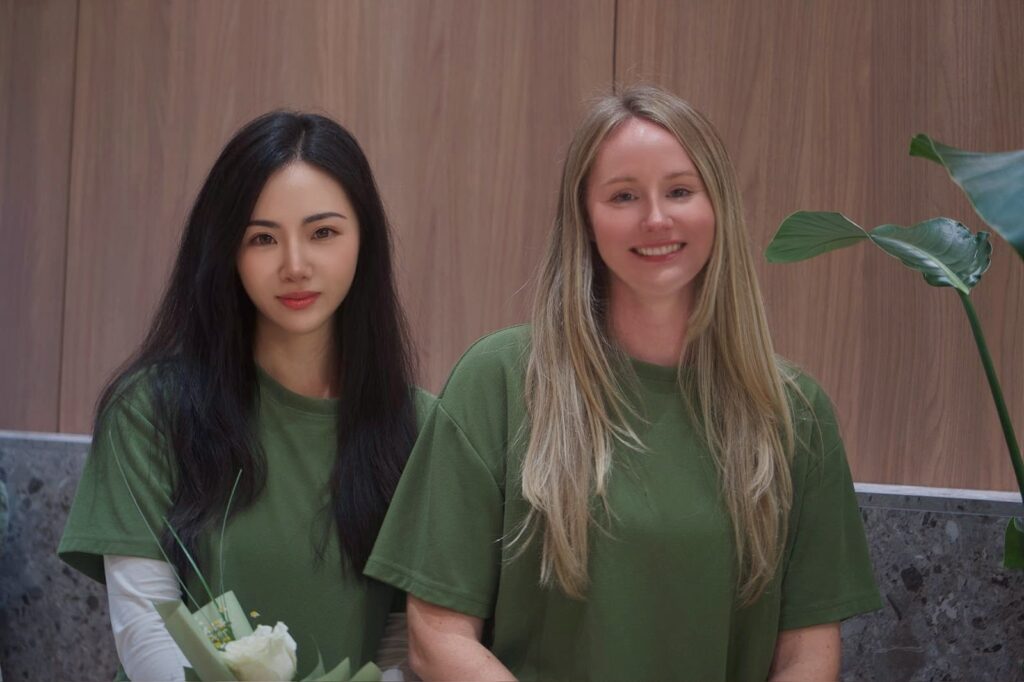
Owner Lulu Wang (left) and Vice Principal Shereen Williams (right).
As parents, we want our children to succeed at school, but what does success really look like? It’s not always about the highest marks or being ahead of the class. Sometimes, it’s about discovering a love of learning, building confidence, finding the right environment, or simply having someone recognize that a child may need a…
Let's talk on co-parenting, the worry usually starts small. Your son shrugs at the tablet and says he will talk to his dad another time. A call gets missed, then another. Nobody has done anything wrong, and yet the relationship feels thinner than it did six months ago. Distance rarely changes how much a parent…
Join our Newsletter to learn about what's happening with BC Parents!