There is no doubt that the way we live and connect with each other has changed, as has the way we raise our children. And let’s be honest, parenting today can sometimes feel like trying to build a sandcastle during a tsunami.
The endless swirl of screens, notifications, videos, influencers, reels, stories, how-tos, guidelines, comments, likes, and tweets has reshaped childhood and parenting in ways many of us never could imagine and can leave even the most well-intentioned caregiver feeling overwhelmed, confused, and exhausted.
You Are Not Failing as a Parent
But here’s the thing; you are not failing. You are raising children in a digital age that none of us were trained for, and most of you are doing the best you can with what you have. And you’re doing it all with heart.
From a Play-Based Childhood to a Phone-Based Childhood
Our children have moved from a “play-based childhood” to a “phone-based childhood” and no longer spend their free time playing with friends in the real world. Instead, the average tween spends up to six hours a day staring at screens. Teens? More like nine. And for many parents, those numbers aren’t just statistics; they are real-life battles fought before breakfast.
In fact, many childhood interactions now no longer require another human body to be present, and with the onset of AI, sometimes not even another human brain!
The trouble is, in order to become physically, emotionally, and socially healthy, kids still need what they’ve always needed— love, connection, emotional safety—and all of these things require another real-life human being.
Finding Balance Instead of Eliminating Technology
So, what do we do now?
Well, the answer isn’t to “put down your phone forever.” And it’s definitely not about shaming you for handing over a tablet so you could take a shower or drink your coffee while it’s still hot. Because, whether we want to admit it or not, advanced technology such as screens, smartphones, and the internet are a part of our world and will continue to be.
But it is about balance, boundaries, and most importantly, relationships.
A Relationship-First Approach to Raising Children
To assist us in solving this problem, we have blended what we know from Chaddock’s Developmental Trauma and Attachment Program (DTAP®) with what we feel from journeying with children and families for more than 170 years.
Our approach is grounded in the science of how kids grow, how their brains develop, and how relationships heal. It’s designed to help you understand the science behind how screens affect your child, learn how to respond when digital disruption strikes, and use our DTAP® concepts to manage behavior and maintain connection.
Helping Children Regulate Emotions in a Digital World
For instance, when screens become the go-to soothing tool, we start to understand why our kids cannot regulate their bodies or their emotions. Instead, we can use attunement to recognize that our child is at the edge of their window of tolerance and co-regulate using a balance of structure and nurture to bring them back to a regulated state.
Or, if we can acknowledge that a tween’s brain isn’t fully developed, we can use verbal responses to convey empathy and sit in the yuck with them when they post something inappropriate online, as we walk with them through the natural and logical consequences of their actions.
Why Strong Parent-Child Relationships Matter More Than Ever
Finally, if we keep relationships as our foundation, our teens will know they can turn to us to help them problem-solve, instead of potentially harmful online outlets when they are struggling with heavy emotions or burdened by a mistake.
Simple actions, repeated consistently, make a real difference. And remember, you are still your child’s parent—that means you are allowed to set structure, even if it’s hard for your child to accept. Meet them with kindness, use your verbal responses to validate their feelings and help them by engaging them in other activities that remind them that there’s fun to be had outside of the screen.
The Future of Parenting in a Digital Age
As we move into an increasingly digital future, let’s not forget what childhood is meant to be: a season of connection, play, growth, and discovery. No app or platform can replace the power of a caregiver who sees, hears, and responds to a child with intention.
Remember, it’s not about perfection; it’s about presence. It’s not about rejecting technology but building a foundation strong enough to thrive within it.
And that begins with us.
About Author
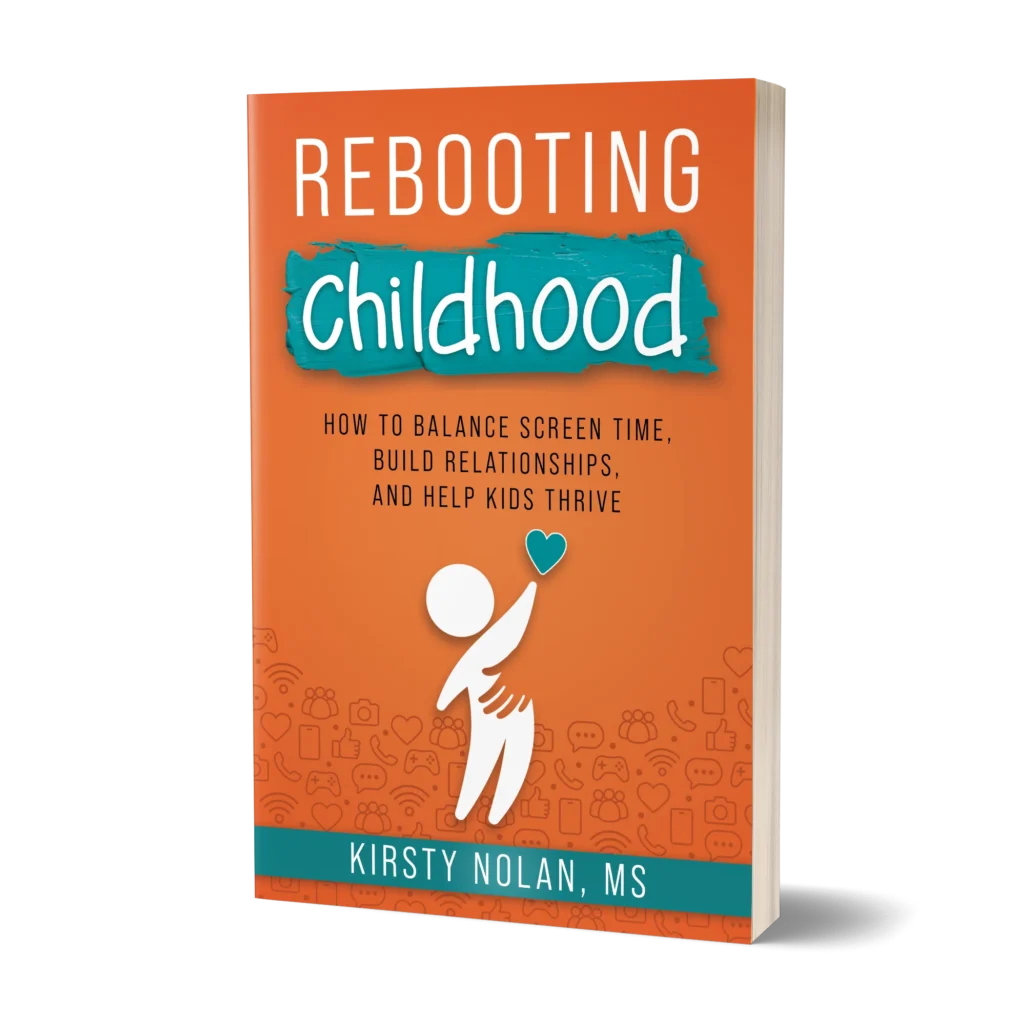
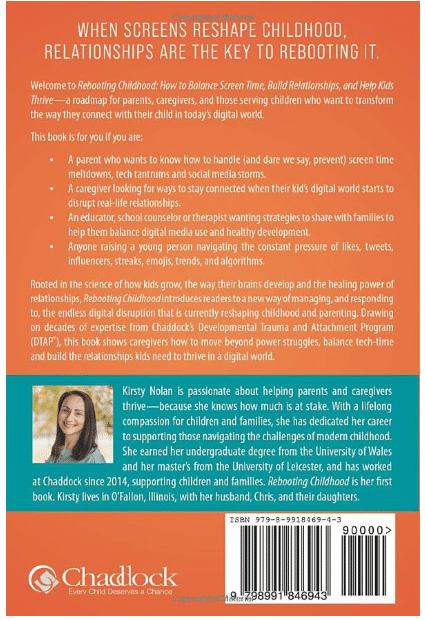
Kirsty Nolan is a mom and the author of Rebooting Childhood (Chaddock Books, 2026)
From infancy and toddlerhood to pre-kindergarten, these formative years bring extraordinary growth as our children discover who they are. But this is just the beginning of their development. Today, we are taking a close look at Rothewood Academy's holistic approach to early education and what this could mean for your child. From learning to communicate…
Let's talk on co-parenting, the worry usually starts small. Your son shrugs at the tablet and says he will talk to his dad another time. A call gets missed, then another. Nobody has done anything wrong, and yet the relationship feels thinner than it did six months ago. Distance rarely changes how much a parent…