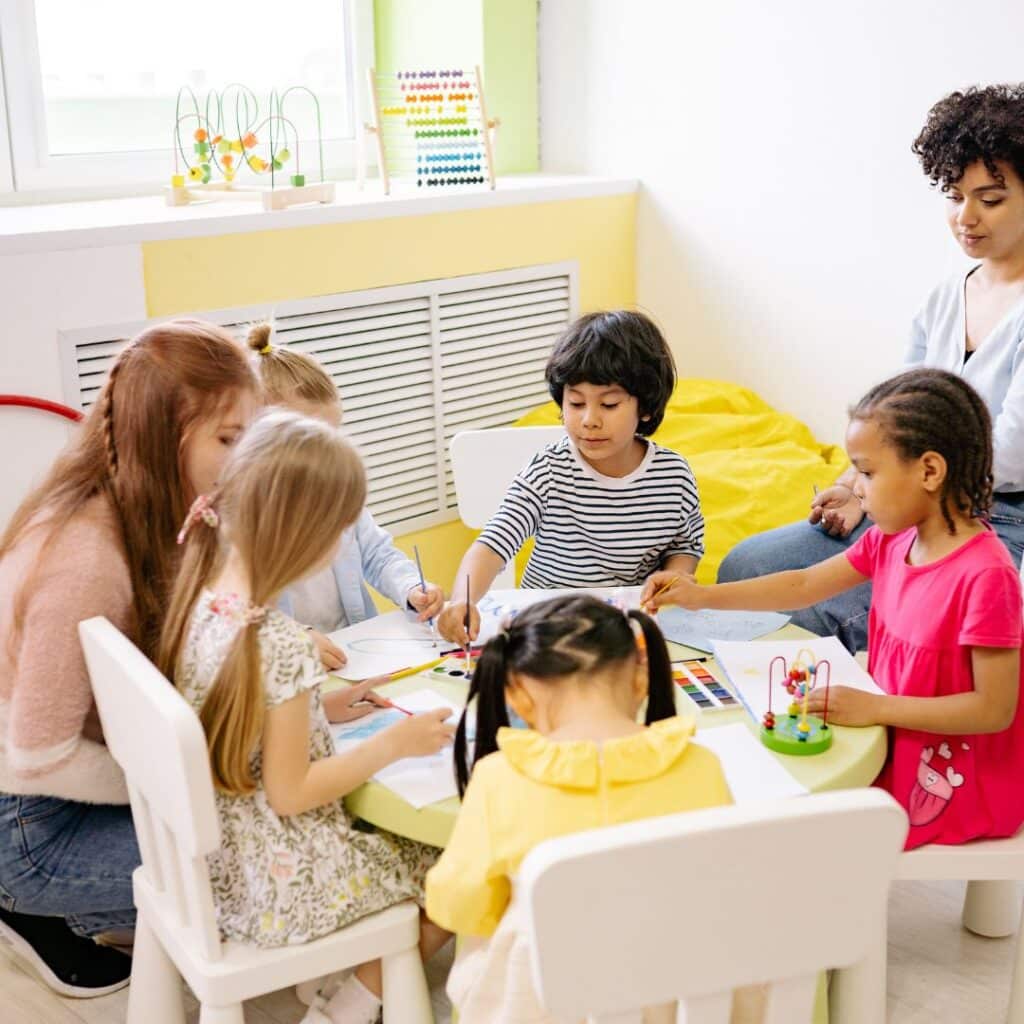
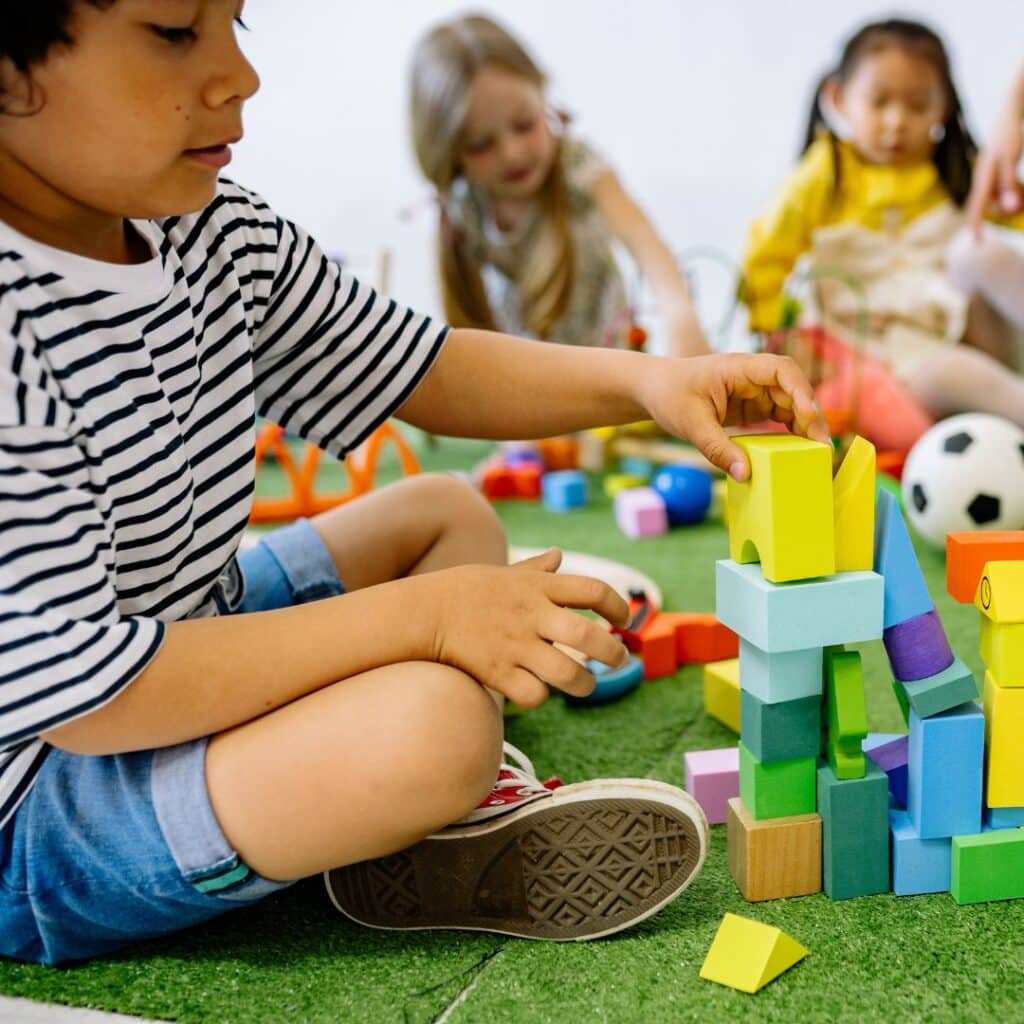
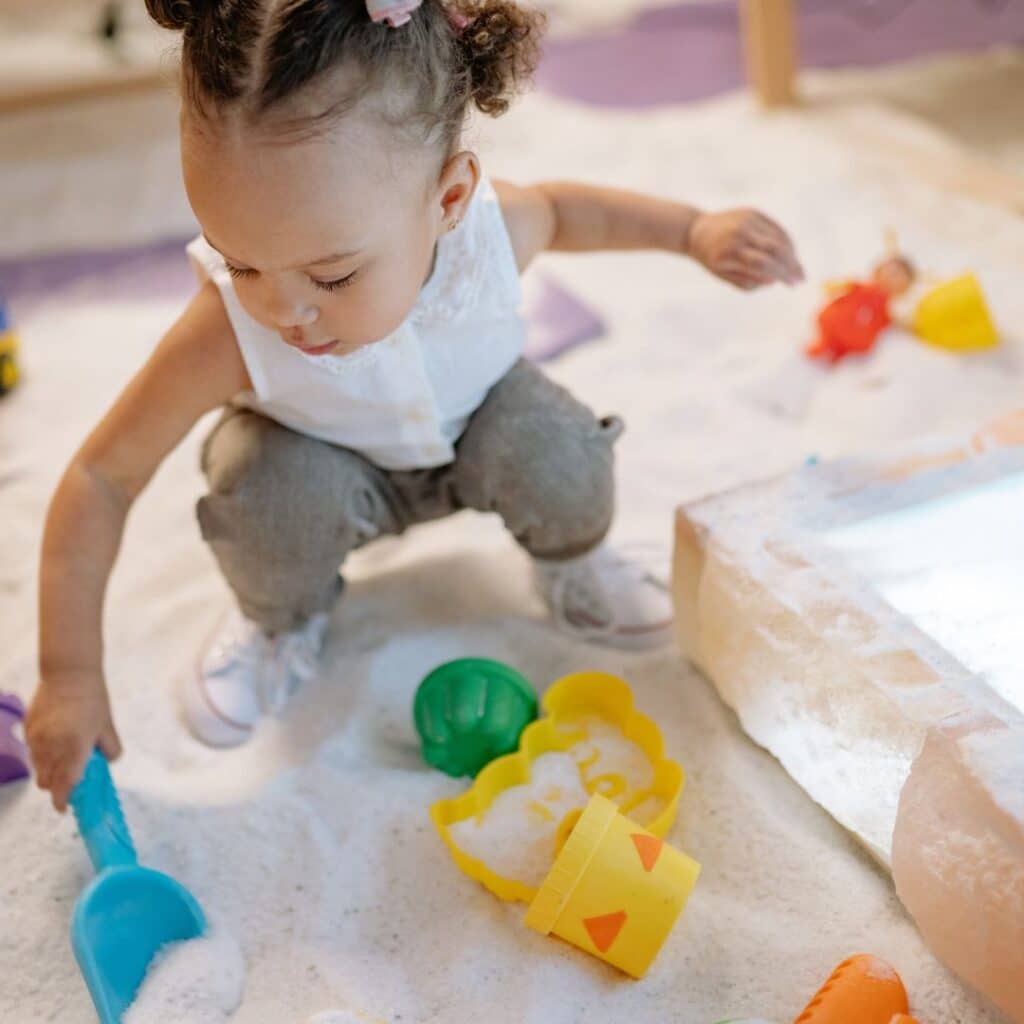
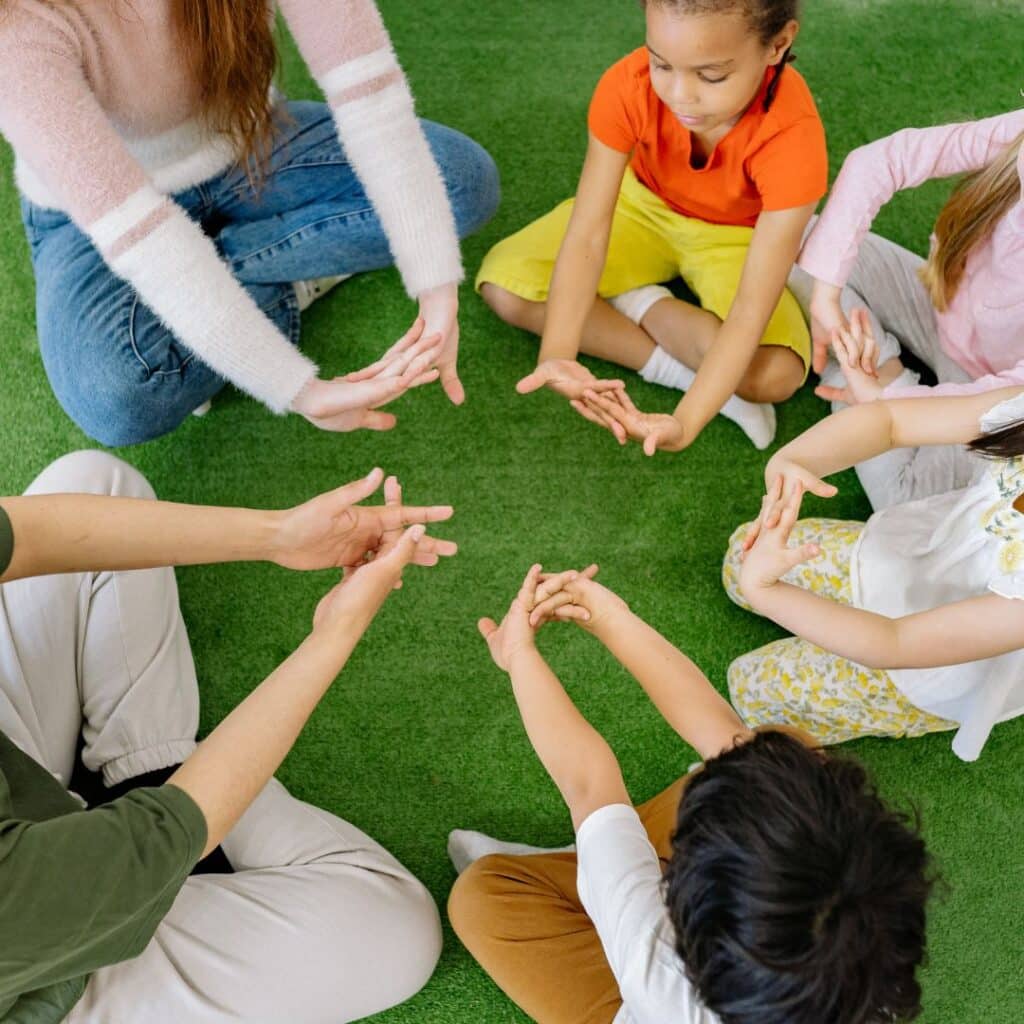
We all know that “play” is a good thing – and not just for kids, but adults and seniors, everyone can benefit from adding more play into their lives. But what about babies? How do babies play, and why is it important to seek out places where your baby can safely explore elements of age-appropriate play?
Let’s take a look at some of the benefits of play for your baby, and discover why babycentric playspaces are the way to go for your little one – and for you.
Benefits of play
Motor Skill Development: Movement is essential to growth, whether it’s large movements like rolling and crawling (gross motor skills) or smaller, more localized movements like grasping and manipulating objects (fine motor skills). When babies are presented with opportunities to explore these movements, they are able to strengthen developing muscle groups which prepares their bodies for further growth.
Brain Development: Whenever your baby is presented with something new, their brain begins the process of exploration. They use all of their senses – What does this look like? Sound like? Feel, smell and taste like? This act of data collection and categorization is how they make sense of the world around them, and it’s super important for cognitive development. Having a variety of safe, age-appropriate toys and objects is a valuable way to stimulate these important cognitive processes.
Language Acquisition: Being involved in your baby’s playtime gives you the opportunity to present them with language input! You’d be surprised how much you can find to talk to your baby about, even when it seems they are not listening or understanding. This raw input is where the value is – babies need to hear the sounds and structures of a language in order to start laying the foundation for speech. During your baby’s playtime, find opportunities to talk about what’s happening and what they are experiencing, not so much for learning the meaning of the words but to experience the sounds.
Social and Emotional Growth: Can babies learn how to share, and build friendships, and manage their feelings? Not at this stage of course, but early playtime is a great time for you to model the behaviours that you would like them to adopt as they grow. “Parallel play” is a term used to describe babies who are playing beside or near each other but not directly interacting with each other. They might appear to be completely unaware of the presence of another baby! But they are observing and discovering subtle rules of social interaction and growing comfortable with the sounds and feelings associated with social environments. It’s a great first step towards interactive play, which will come later in their developmental journey.
There are many other benefits of baby play including: sensory stimulation, exploring and testing boundaries, learning responsiveness cues, and bonding with a parent or caregiver.
Given these benefits, we might think that any opportunity for play is beneficial – and that’s true! – but let’s consider the advantages of finding, or creating, a specialized play setting for your baby that will encourage and strengthen these developmental steps.
Age-Appropriate Play Strategies For Very Young Babies:
There are countless ways to playfully engage your baby, here are just a few:
Tummy time: As a parent, you’ve probably read a lot about “tummy time” already, and how valuable it is for your child to build muscle strength in their neck and shoulders, among other things. This is a great start to age-appropriate play in the very early months, even though you might not think of it as a playful activity – you can o er them something to look at or reach for, or incorporate music and gentle massage, there are lots of ways to make tummy time fun and playful!
Reaching and Rolling: As your baby grows and begins to gain some control over their body, these extension activities can be fun to include in your playtime routine! Practice by putting a toy just out of reach, and notice how, as your baby gets older and stronger, they find new and creative ways of moving their body towards it.
Peek-a-boo: I think this is my favourite game of all times, it never gets tiresome (well, not to your baby at least) and there are so many ways to shake it up, like using a scarf, or hiding behind your hands, or placing a toy in the line of sight between you and your baby. The gentle reassurance that “you are always there” is a comforting reality that every baby enjoys learning again and again (and again…)
Sensory Play: Water, wind, sunlight – these are all sensations that stimulate your baby’s body and brain and teach them about the world around them when you’re outside, but you can experience these feelings inside as well – having bathtime just for fun, sitting near a (safe) cooling fan, having a cuddle in a sunbeam by the window. There are lots of toys that simulate these and other natural sensations, and it can be really fun to explore different sensory toys and see how your baby reacts.
These are just a few early-years play strategies, but there are so many more! And as your baby grows and reaches more developmental milestones, the list just gets longer. But there’s one thing they all have in common: they don’t require a large space, or a lot of “stu ”. In fact, they are better experienced in a smaller, quiet environment without too much external distraction to get in the way of the simplicity of the experience.
Speaking of playspaces, let’s get to the heart of the matter – why should you look for a space that is specially designed for babies when it comes to playtime?
Baby-centric vs child-centric designs
Most playtime for babies can easily and comfortably be accomplished in your home. As we have discovered, all you need is a clean floor area, maybe a soft mat for tummy time, a few tantalizing toys to encourage reaching and grasping, and the rest is really just you. And there’s the problem – it’s YOU doing the work, YOU providing the stimulation, YOU creating the environment and remembering to “narrate your day” and over a variety of textures and also, in case you forgot, feeding and diaper changing and nail trimming and bottle washing and… you get the idea. It’s hard. Isn’t playtime supposed to be fun?
This is where public play spaces come in!! Most neighbourhoods offer a wide range of activities for you and your child, whether a community centre, café or private facility. And many of these are open to kids ages 0-5, what we could call a “child-centric” design, meaning that they are designed with the needs of the child are prioritized.
There is likely a baby zone included, usually a separate area with baby toys and more open floor space. Ideally, this area should be partitioned, to prevent older babies and children from clamouring around – and over! – your baby. If you are comfortable with the noise level and energy level (and germ level) in these spaces, then they can be a great place to bring a baby together with an older sibling.
If however, you are at home with your first baby and looking for an out-of-home playspace, this environment might be a bit… much. Then it’s time to look for a baby-centric playspace, one that prioritizes baby needs and is designed with baby-functionality in mind. Baby-centric spaces are specially created to meet the needs of babies, without having to factor in large climbing structures or flashing lights, things that typically appeal to older children. And – something that tends to get overlooked – they are also designed to meet the needs of new parents: things like comfortable seating areas, baby-friendly washrooms, and are quiet/cozy enough to chat with other parents.
A baby-centric space should:
Be able to accommodate the specific developmental needs of the very young baby, so that you could even feel comfortable bringing your newborn into that space.
Have windows to let in the natural light.
Have clean and open floorspace where your baby can engage in floor-style activities like tummy time and rolling, and crawling and exploring as they get older.
Have age-appropriate toys and activities for all stages of baby development, with a wide range of colours and styles to suit different preferences.
Have some small climbing equipment, whether wooden or padded, for when your baby is ready to start exploring their mobility.
Have books and other literacy-helpers to encourage parents to read aloud and provide a language-rich environment.
Have a selection of musical instruments to challenge hand/eye coordination and allow for auditory cause-and-e ect styles of play.
Have baby-friendly amenities like a change table, nursing chair and maybe a quiet room for napping or taking a little break.
Ideally have a comfortable environment for meeting and chatting with other new parents (ok, maybe this is a more “parent-centric” thing, but it’s also really important!)
Essentially, a baby-centric playspace should feel like an extension of your home, somewhere you can feel just as comfortable as you would at home, but without the burden of having to stay home all the time.
If you can find a place that meets many of these criteria, and you feel “at home” there, then you will have found the perfect spot to bring your baby to play!
Finding the right space to accommodate the specific play requirements for your baby will give you such peace of mind. You can assess the developmental needs of your baby based on their skills and milestones, and then gradually add new activities to their routine.
You can feel great about providing a safe, clean, developmentally suitable environment for your baby that will benefit them at each successive stage of growth. And you might just make some new friends along the way!
Article by Nicole Walker owner of Little Words Studio Nicole is a musician, teacher, parent, business owner, and passionate advocate for happy families. She believes that a strong community begins with the littlest neighbours, and by nurturing families we can create a better future – together.
Every fall, millions of Pacific salmon across British Columbia fight their way upstream to return to the rivers and creeks where they first hatched. It's one of the greatest wildlife migrations on Earth, and one of the most accessible for B.C. families. In fact, it’s often no more than a short walk from the car,…
Looking for family fun this summer? Discover 50 must-try activities across Vancouver, Burnaby, the North Shore, Surrey, Richmond, Langley, the Tri-Cities, and the Fraser Valley. Perfect for families with kids of all ages.
Join our Newsletter to learn about what's happening with BC Parents!