

The Unstoppable “Reset” Mindset
8 min read
Reset is for anyone who knows the strain of balancing life on the tightrope of being everything to everyone.


This morning, as I watched my daughter struggle to tie her shoes for the fifth time, I felt that familiar tension rising. We were running late. Again. I could feel the words forming: “Just hurry up!” But then I caught myself. What message would that send? That speed matters more than persistence? That frustration is failure?
Instead, I took a breath and said, “You’re working so hard on this. That’s what matters.” She looked up, smiled, and kept trying. We were still late. But something more important happened in that moment—something about who she’s becoming, and who I’m becoming as her parent.
January brings the inevitable avalanche of “New Year, New You” messaging. Set goals! Make resolutions! Transform your life! Yet 92% of these resolutions are abandoned by mid-January. Why? Because they focus on doing different things rather than being a different person.
The real question isn’t “What do I want to accomplish this year?” It’s “Who am I becoming, and who are my children becoming through the daily choices we make together?”

Identity—our repeated way of being—shapes everything. If I’m constantly stressed, frazzled, frustrated, running on empty, my children absorb that. They learn that’s what adulthood looks like. But if I model celebrating small wins, choosing progress over perfection, and meeting challenges with curiosity rather than criticism? They learn something entirely different.
Our children are watching. Not just what we tell them to do, but who we are when things get hard.
Stanford psychologist Carol Dweck’s research reveals a critical truth: the beliefs children hold about themselves matter more than IQ, natural talent, or early achievement. Children with a growth mindset—who believe abilities develop through effort—don’t just perform better academically. They build resilience, embrace challenges, and develop healthier identities.
The difference shows up in how they talk to themselves:
Fixed mindset: “I’m bad at math. I’m not creative. I can’t do this.”
Growth mindset: “I haven’t figured this out yet. What can I learn? What needs more practice?”
That word—yet—transforms failure from identity (“I am bad”) to temporary state (“I haven’t learned this yet”).
As parents, we shape this mindset daily through our language:
Instead of “You’re so smart!” try “I noticed how you kept working even when it was frustrating.”
Instead of “Don’t worry, that’s just not your thing” try “This is challenging right now. What could we try?”
Every morning at our front door, I tell my kids: “Be a good friend today.” Not “have fun” or “do well”—but a reminder of the identity we’re building. Who do you want to be? How do you want others to remember you? What would that kind, gentle person do?
These questions invite children to think about character rather than performance.
Olympic gold medalist Lanny Bassham discovered that elite athletes consider their sport 90% mental—yet spend less than 10% of their time on mental skills. The gap is startling. And it exists in parenting too.
Bassham’s insight: parents are their children’s first mental coaches. We shape how they think about themselves and their capabilities through the car ride home from practice, our response when homework frustrates them, the stories we tell about their day.
We’re constantly feeding their self-image—that internal picture of “who I am” that determines how they show up in challenges. Building a resilient self-image isn’t about empty praise or shielding children from failure. It’s about helping them document their growth.
Every morning as part of my routine, I review what I call “hero bars”—cards documenting challenges I’ve overcome, virtues I’ve embodied, mentors who’ve supported me, behaviors that worked. When things get tough, I feast on these reminders: Look what you’ve already done. Imagine what else you can achieve.
Once I saw how powerful this practice was for me, I started doing it with my children. We created their own hero bars: “Learned to ride a bike,” “Made a new friend when scared,” “Kept trying with reading.” When they face something new and intimidating, we pull them out together.
This isn’t about inflating egos. It’s about building accurate self-knowledge: I am someone who persists. I am someone who learns.
How children handle emotions directly shapes their identity. The child who learns “I can feel angry and still choose kind actions” builds a different sense of self than the child who believes “I’m bad because I get mad.”
We cultivate this awareness by naming emotions without judgment: “You seem really frustrated right now.” By modeling regulation: “I’m feeling overwhelmed, so I’m going to take three deep breaths.” By showing that all feelings are valid, even if all behaviors aren’t.
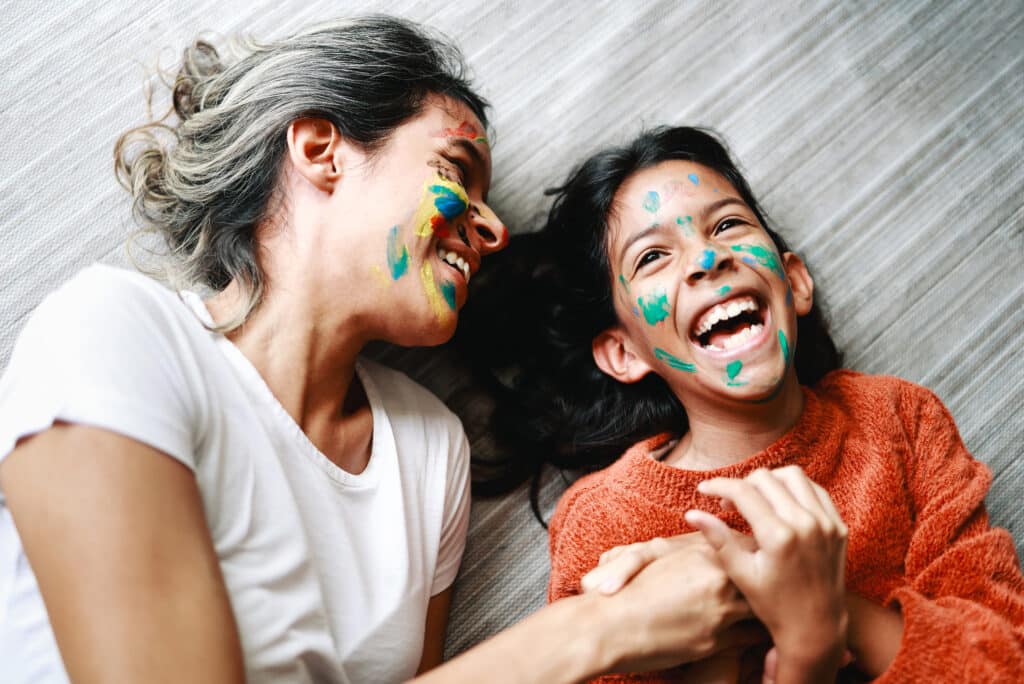
In our home, evening gratitude practice helps. We share what we’re grateful for, but also what was hard—not to dwell, but to normalize the full range of human experience and practice naming feelings without being overwhelmed.
And I model self-celebration. When I accomplish something, even something small, I celebrate. A kitchen dance party. A literal high-five in the mirror. Why? Because my children are watching. If I only celebrate them but never myself, I teach that self-recognition is somehow inappropriate. It’s not. It’s healthy self-regard.
Supporting identity development doesn’t require a complete overhaul. Small, consistent practices matter most:
Ask identity questions. Not “Did you win?” but “What kind of teammate were you today? How did you want to show up?”
Embrace “win or learn.” Every experience offers either success or lessons. When plans fall apart: “What did you learn? What would you try differently?”
Focus on process over product. Name the behaviors you want to reinforce: “I saw you help your brother when he was upset. That’s the kind of caring person you’re becoming.”
Model growth mindset yourself. Share your own learning: “This recipe didn’t work, but now I know to try less salt. That’s useful information!”
Set process goals. Help children focus on what they control: not “make the team” but “practice three times a week” or “ask questions when confused.”
This is the gift of identity-centered parenting: a foundation that serves children far beyond childhood. The growth mindset student who struggles but persists becomes the adult who doesn’t quit when careers get hard. The child who learns emotional regulation becomes the teenager who navigates peer pressure with integrity. The young person who develops a flexible sense of self becomes the adult who adapts to life’s changes without losing their core.
It’s not just about what they accomplish—it’s who they become through the effort.
As January unfolds, consider reflecting with your children if they’re old enough: What went well last year? What needs work? What are we grateful for?
Not to judge, but to learn. Fresh starts don’t erase what came before—there’s no parenting reset button. But there’s always the opportunity to pivot, to show up better today than yesterday.
This is growth mindset parenting: recognizing we’re all works in progress, that mistakes are part of the journey, that the goal isn’t perfection—it’s consistent, intentional effort.
Because the question isn’t just “Who are they becoming?” It’s “Who are we becoming as we guide them?” The most powerful way to help children develop strong identities is to work on our own. When we model growth, self-compassion, emotional awareness, and courage despite difficulty, we give them permission to do the same.

That’s identity-centered parenting. Not flawless, but intentional. Not perfect, but present. Not about having all the answers, but being willing to learn alongside our children as we all become who we’re meant to be.
Linda Bartholme is a mom, educator, an award winning certified coach, workshop facilitator, speaker and the founder of Be Thriving Moms Today in the Comox Valley. She helps moms in midlife live aligned, authentic lives through science-backed coaching and mindfulness. Learn more at www.bethrivingmomstoday.com & join her community at www.linktr.ee/be.thriving.moms.today

 The Unstoppable “Reset” Mindset
 Seamless Childcare in BC Schools Is Gaining Momentum
 2026 New Year’s Resolutions and the Personal Impact They Have on Individuals
 5 Mind-Blowing Ways to Help Your Neurodivergent Child Through BC’s Dark, Rainy January
 Curious On How To Gain More Life in 2026? VO2 Max is Your Answer
Reset is for anyone who knows the strain of balancing life on the tightrope of being everything to everyone.
New Year’s resolutions have symbolized intention, reflection, and personal growth...

The nominations have been tallied, and the voting begins on January 10th! Look at the Family Favourites you nominated! Family Favourite Nominees 2026 Congratulations to all the nominees!