As a parent, understanding the unique challenges faced by neurodivergent children during this season is crucial. It’s 4:30 p.m. It’s already dark. It’s been raining all day. And your child is climbing the walls—sometimes quite literally.
January in British Columbia can feel endless. Parks are muddy, playgrounds are soaked, and getting outside takes far more effort than it does in other seasons. While all children feel the impact of dark, wet winter days, neurodivergent children (such as those with ADHD, autism, or other neurodevelopmental differences) often experience it more intensely. Their nervous systems are especially sensitive to changes in light, movement, routine, and sensory input.
The good news? There are practical ways to support regulation when the weather simply won’t cooperate.
1. Get Outside Anyway (Yes, Really)
When the rain feels never-ending, it can seem counterintuitive to head outside, but even a short time in the fresh air can be one of the most helpful tools for supporting children’s regulation. The combination of cool air, gentle movement, and varied sensory experiences helps calm growing nervous systems in ways that are hard to recreate indoors. Perhaps most importantly, time outside can ease stress and anxiety, lift mood, and help children return indoors feeling more settled, focused, and connected.
Good rain gear is worth the investment: waterproof boots, jackets, and pants make a big difference. Once you’re prepared, even 10–15 minutes outside can help. Puddle jumping, short nature walks, or a quick trip around the block all count.
You might be the only family out there, and that’s okay. Your family’s wellness matters more than a little wet laundry. Aim for daily outdoor time when possible, especially after school.
2. Build Physical Activity into Indoor Days
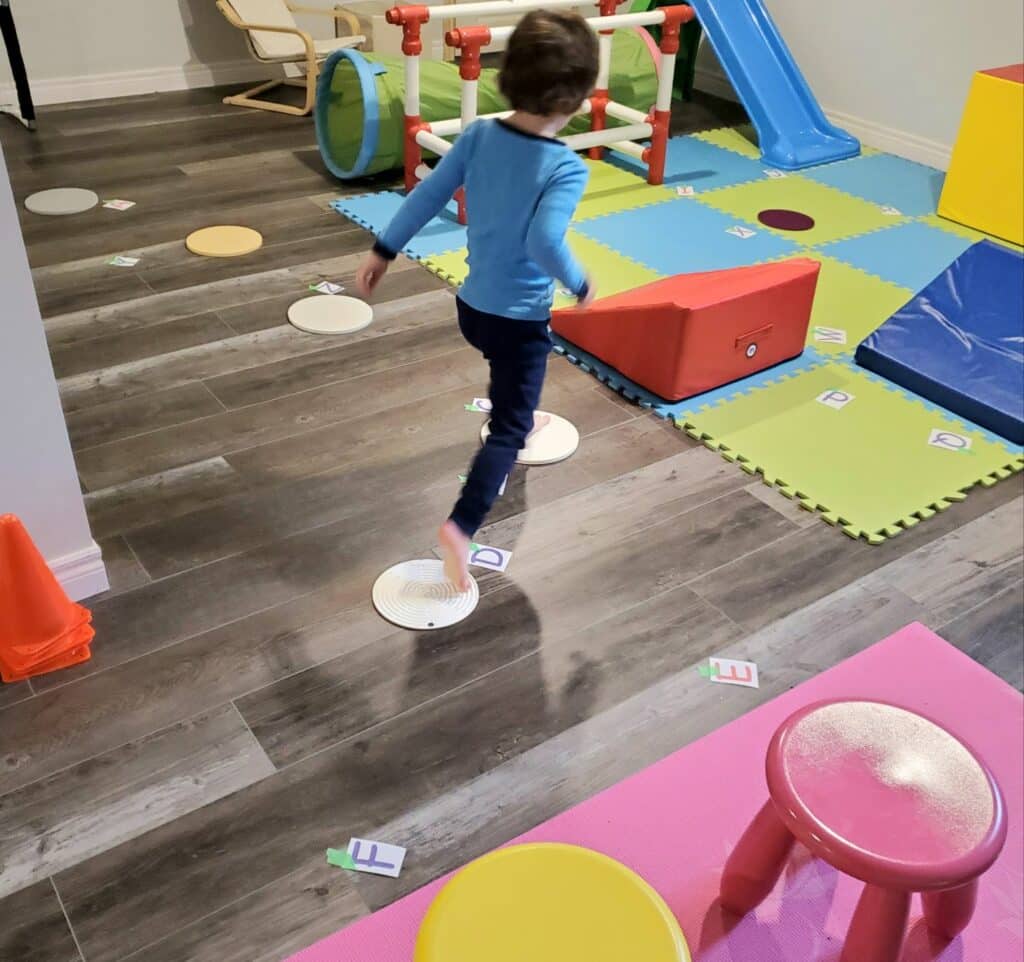
When outdoor play isn’t an option, indoor “heavy work” can be especially helpful. Activities that involve pushing, pulling, or carrying provide proprioceptive input, which has a calming effect on the nervous system—particularly for children who seek movement or deep pressure to feel calm.
Simple, low-space options include:
Wall pushes (10 repetitions)
Carrying laundry baskets or groceries
Helping move lightweight furniture
Pushing or pulling games
Animal walks such as bear crawls or crab walks
These activities can be useful every 60–90 minutes on long indoor days. Even in small apartments or condos, heavy work doesn’t require much space, and it often feels like helping or playing, not exercise.
3. Use Light Therapy for Dark Mornings
In January, the sun often doesn’t rise until close to 8 a.m. This lack of morning light can affect mood, energy, and emotional regulation.
A light therapy lamp used during breakfast for about 30 minutes can help signal the brain that it’s time to wake up. While often associated with adults and seasonal mood changes, children’s nervous systems benefit from consistent light cues as well. As with any intervention, it’s wise to check with your child’s healthcare provider if they have specific medical considerations.
4. Schedule Structured “Boring Time”
When it’s dark and rainy, screens quickly become the default. While understandable, constant stimulation can make regulation harder and can make transitions away from screens more difficult.
Build in 30–60 minutes a day of low-stimulation, unstructured time. This might look like lying on the floor, staring out the window, drawing quietly, or doing very little at all. The key is resisting the urge to fill the silence.
Children may protest, and that discomfort can feel like parental failure, but it isn’t. Boredom helps build tolerance for downtime and can spark creativity in ways structured activities often don’t.
5. Know Your Breaking Point—and Use Indoor Options Strategically
Some days, your child simply needs to move, and a change of scenery can make all the difference. Indoor options can provide important sensory input before emotions escalate.
Helpful options include:
Library programs (often free and quieter)
Community centre drop-ins during off-peak hours
Swimming pools, which offer calming sensory input
Lower-sensory indoor play spaces
Museum or gallery
Planning these into your week as part of a regulation strategy, rather than as last-minute rescues, can help prevent bigger meltdowns later in the day.
January Is Temporary; Regulation Skills Are Permanent
Some days you’ll survive January. Some days you’ll thrive. Both are completely okay. These strategies won’t make BC’s winter brighter, but they can make it more manageable for your child and your family.
If regulation challenges persist despite these supports—or begin affecting sleep, appetite, or relationships—it may be a sign your child needs additional skill-building. Programs such as Secret Agent Society, THRIVE ADHD + Me, and brain-based emotional-regulation programs focus on strengthening emotional regulation skills that extend well beyond the winter months.
You can’t change BC’s January weather, but you can change how your child moves through it.
About Author
Kristi Rigg, BEd, MEd, is the Founder and CEO of West Coast Centre for Learning in Surrey, BC, where she leads evidence-based programs for neurodivergent learners. With over 30 years in education across Canada, Hong Kong, and Brazil, Kristi has established international schools and taught at the Chinese University of Hong Kong. She holds a Master’s in Education Management (Hons) from the University of Bristol and remains actively involved in client programs including PEERS® and Secret Agent Society (SAS). Kristi is a regular contributor to regional publications on neuroaffirming support and cognitive development.
A family road trip is magic, the highway, the flyover small towns no one ever goes to otherwise; kids pointing out cows in Africa back at the Africans like they show them cows every crazy weekend. However, people who have spent four hours travelling with a non-napping toddler and a five-year-old asking for the seventeenth…
Most adults look back on their childhood summers with a certain degree of nostalgia, but as someone who grew up in the ‘90s, I can’t help but think that there was something truly special about those years. Parents, usually mothers, were background figures, accessible in emergencies but otherwise seen only during mealtimes—and sometimes not even…
Join our Newsletter to learn about what's happening with BC Parents!