To a busy parent rushing to put a weekday meal on the table or trying to find a few, free minutes to sew a button on their child’s shirt, the prospect of teaching their kids life skills such as sewing or cooking may seem an impossible task. Experts advise starting slowly with simple, easy, fun projects usually on a quiet weekend. By tapping into a child’s sense of fun and discovery with shared hands-on activities, the entire family may benefit from quality cooking or crafty time together, while enhancing a healthy, happy home-life. Exploring outside inspiration and support through classes or online resources can also ease the learning process.
SEWING SKILLS
Learning to sew teaches basic motor skills, coordination, self-confidence – along with a sense of starting and finishing something. Liza Deyrmenjian, Fashion Business Consultant, and Mentor with The-Cutting Room – a Vancouver fashion and sewing teaching centre offering classes for children and adults – has first-hand experience with kids’ sewing classes. She acknowledges the importance of children learning skills such as sewing. “Making anything teaches you to think through a problem, and makes you come up with creative solutions.” Sewing incorporates and grows skills in engineering, technology, design and conceptualization. “What is beautiful to see is that kids don’t know that they don’t know,” adds Deyrmenjian, “So for them, it’s, ‘I have never used a sewing machine…. so what are we waiting for – show me how!’ Once they have the basics of how to thread the machine, they are off and running. Sewing is also good fun for kids.”
“The sense of accomplishment kids and adults get from making something is fantastic to watch over the course of our classes. We had a 9-year-old girl in our beginner’s sewing class, and her father called to say, ‘ she has never used a sewing machine before…. is that ok?’ My answer, ‘it’s perfect.’ The young girl then made a pencil bag with a zipper closure her first day and an A-line skirt her 2nd day. She also made a beautiful jeweled headband, and importantly, she was so thrilled to learn.”
The-Cutting Room recently had a mom with her two daughters take a class together. They each made a tote bag – a successful experience that was fun for both mom and girls. Making a tote bag is a great sewing project because kids can use it immediately. They can decorate the bag, and it gets their creative juices going. Making a dress, or a sweatshirt is an excellent project because participants learn how to put in a zipper and how to make button holes. “These are clothing items that kids wear or use every day,” adds Deyrmenjian, “and it makes them see things so differently when they later look through magazines or Snapchat! Or even how they view just getting dressed. They start thinking how things get put together.”
COOKING WITH LOVE
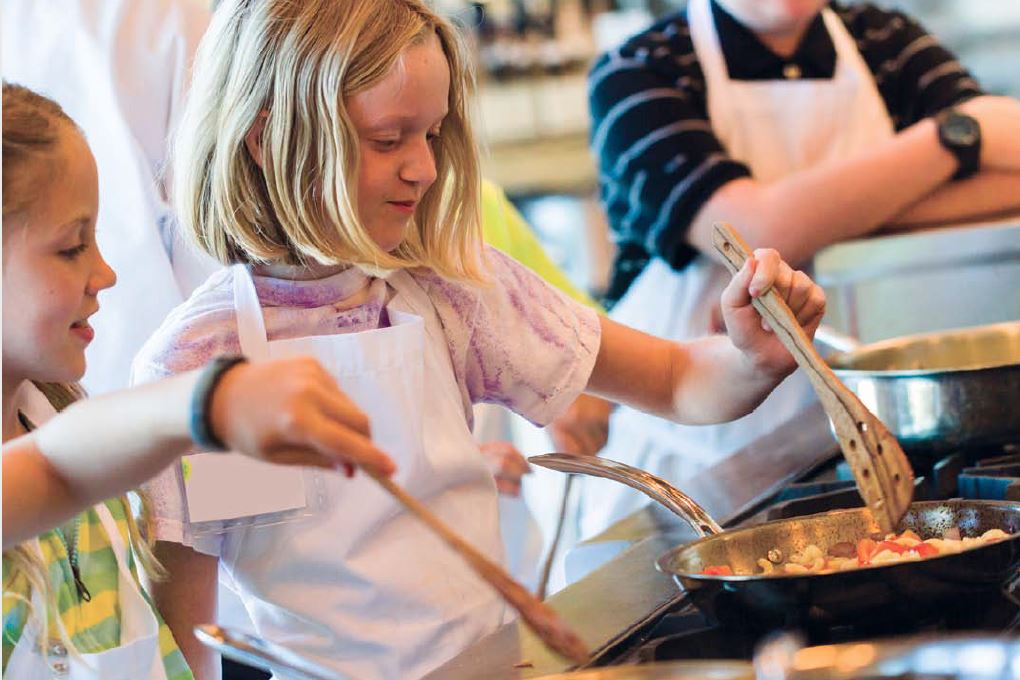
Cooking is another valuable life skill that develops children’s self-confidence. With educational opportunities like the Food Channel and kids’ cooking competitions such as Master Chef Junior, a new passion for kids cooking has emerged. Cooking introduces tasks such as reading recipes, which can assist your child’s reading abilities. Measuring ingredients can facilitate math proficiency.
Barb Koyanagi McMahon – cooking instructor and garden coordinator with Sprouting Chefs – through her cooking classes emphasizes how kids learn a sense of service to their family and others when preparing food. “We focus on service, generosity and how cooking is an expression of love, when we cook and nourish others. Our Sprouting Chef’s motto is: love yourself, love the earth and love your food. We teach how it’s all connected!”
McMahon’s classes also highlight expanding kids’ palettes. She offers practical tips for parent’s introducing their children to cooking.
- Put aside enough time to prepare so that you aren’t in a mad rush. For example: don’t involve your kids in cooking on a busy weekday night when you have tons of things to do.
- Try a Sunday when you’ve got more time to do a slow-prepared family meal together.
- Have patience and start slowly. Whatever your comfort level, is a great place to start.
- Create a sense of adventure while showing faith that it’s all going to work out.
- Try not to bring a sense of fear into the kitchen even if you are nervous about safety aspects on items such as knives.
- For young kids, give them ingredients like herbs or salad greens that they can tear up with their fingers.
- Look at cookbooks together. Try basic recipes and break them into smaller stages.
- Bring your kids grocery shopping with you and have them pick out some ingredients.
- Have your children set the table.
- Focus on what your kids are doing really well.
- Make cooking a family thing. Get inspiration together from resources such as YouTube, Netflix, and Master Chef Junior.
McMahon suggests beginner recipes to start off. For youngsters, start them by helping identify different flavour profiles, eg: sweet, sour, bitter, spicy. Let them taste these flavours. Let them then make a vinaigrette in a jar where they can add various combinations of vinegars, sours, honey, different oils. Have them shake that up. Invite them to taste it, and have them suggest any changes. This is a good way to encourage kids to eat salads.
For older children, a tomato pasta dish with five or six ingredients is a good beginning project. Get them peeling and crushing garlic, cutting cherry tomatoes, putting fresh basil in a frying pan with olive oil, and adding pasta. Have them grate their own cheese. In this recipe, the smells, sounds, and sizzle will be engaging for your kids.
“It’s amazing what can happen when you give kids a voice in the decision-making choices around your house. Get ready to be inspired by them! And be proud of them when they create something for you as their skills develop,” emphasizes McMahon.
RESOURCES:
The-Cutting Room.com – sewing classes & parties for kids
quiltedbear.ca – Ladner sewing classes for kids 9 – 15 years
sproutingchefs.com – cooking & gardening classes
Project CHEF Education Society projectchef.ca
Dizzywhisk.com – in-home cooking classes & cooking lesson birthday parties for kids, teens, and adults.