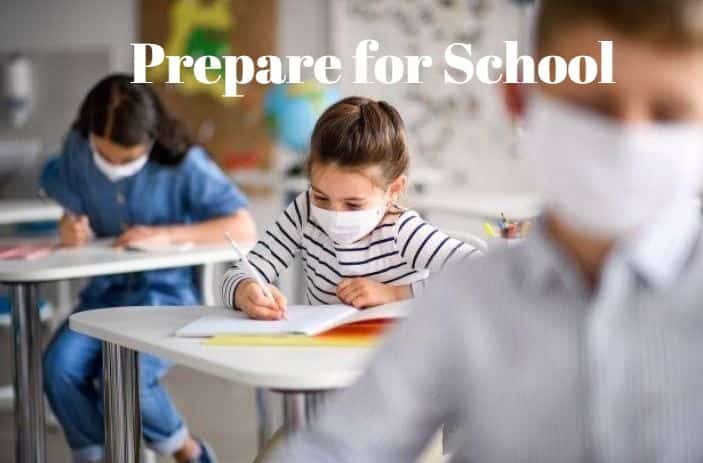
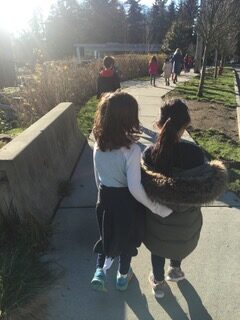
Come September, families are expected to send their kids for in-person learning at school. It is an important and welcome step for all. My granddaughter moving to grade two cannot wait to get back to school, especially to play with her classmates! This article provides some tips on preparing your kids for back to school during COVID.
Most kids will be returning to school after nearly 5 months since March. That will take some getting used to. From worksheets and virtual sessions from inside the comforts of home to now learning in-person. Usual back-to-school flurries of a new teacher and perhaps new classmates as well.
Further, the school environment will be different given COVID adjustments. Play and social interactions at school will be restricted to the learning groups. Limited access to the playground, structures, gym, and library. Kids may miss some of their friends who opt for remote learning instead of being in person or because they are in a different learning group. Friends outside the immediate classroom will not be accessible. They will certainly miss a number of out-of-school activities such as sports or birthday parties. Some kids, school bus drivers, and school staff will be in masks, which may seem strange.
Going back to school is good but parents need to be aware that kids are not returning to the usual, pre-COVID environment. Younger kids will not have spent as much energy at school and will want to do more physically when they get back home. Limited social interactions may disappoint some kids that school is not as fun as it used to be. Some may even be scared and stressed with the restrictions and new procedures.
Thankfully, parents can support their kids in this ‘new’ normal by planning, being flexible, and proactive.
Following are some suggestions for families to keep in mind.
Preparing a ‘COVID’ back-to-school plan and role-play
Kids feel reassured when they know what plans are in place and what changes to expect. Talk with your kids about what might be different. How will the classroom look like? How about lunch and recess? Which activities will not be there? Walking through the specifics can give your kids something concrete to hold onto. Practicing different scenarios ahead of time is a good way to give kids a sense of control. Give extra support to your child at home by creating a routine around school and schoolwork.
Few points to factor in your plan:
- Ingrain hand washing or sanitizing at every transition of the day. It sounds easy enough, but try to ingrain in your child’s head the importance of cleaning their hands whenever they leave home, arrive at school, enter the classroom
- If you are opting to encourage your child to wear a mask, invest in a mask with ‘superpowers’. Here are some fun, affordable designs from McCarthy Uniforms. Buy a washable cloth face covering that expresses your child’s personality – after all, they will be wearing it for a long time. The perk of ditching the disposable mask is preventing an unfortunate mix-up with other students’ masks. For younger kids struggling with wearing masks, help them feel more comfortable with the idea by making it into a fun game. One idea is to say, “Your mask gives you superpowers, so you want to make sure to keep it on all the time. And if you touch your face or touch someone else, that reduces your power.”
- Have your child shower when they come home. Switch their normal shower or bath time by bathing and changing their clothes right when they return from school
- Talk to your kids about what to do if they do not feel safe or other kids are not following the rules. They should know that they could talk to the teacher or tell you if that happens
Tell your kids, “If anything changes, we will work as a team to come up with a new plan. We will figure out together to keep you learning and connecting with other people while keeping you safe.”
Monitor, stay informed and adapt
Kids are resilient by nature, but parents can model that resilience too. Being flexible, adapting to change, and focusing on the positive are all important life skills to have, and COVID is a great teaching moment for developing those skills.
It is possible that schools will change procedures, depending on the local context. Because of the evolving situation, parents will need to be flexible and ready to adapt.
Find out how to stay in touch with your children’s teacher or school to stay informed, ask questions, and get more guidance. Also, let them know if your child is facing specific challenges, like heightened anxiety due to the pandemic. Parent or community groups can also be a good way to stay informed.
Try to be flexible and forgiving with your children and yourselves. This year is going to be harder for everyone: kids, parents, teachers, and schools. The goals we want to achieve may change as the year passes.
Listen to your child
Encourage your children to ask questions and express their feelings with you. Remember that your child may have different reactions to stress, so be patient and understanding. Continue to create a supportive and nurturing environment and respond positively to questions and expressions of their feelings. Drawing, stories, family games, and other activities may help to open a discussion. Show support and let your child know that it is not only okay but also normal, to feel frustrated or anxious at times like this.
Try not to minimize or avoid their concerns. Be sure to acknowledge their feelings and assure them that it is natural to feel scared about these things. Demonstrate that you are listening by giving them your full attention, and make sure they understand that they can talk to you and their teachers whenever they like.
Stay centred to better handle stress
The new learning environment may stress kids. New rules may force you to change plans and reset expectations stressing you, the parent. Important for the family to stay centred to be in a better position to handle stress.
- Positive relationships with parents is a key driver of social and emotional development of kids. Spending quality time together builds positive relationships. Joint family activities such as cooking, reading or games are some places to start
- Join a parent or community group to connect with other parents who are going through the same experience to share tips and get support
- Incorporate play into learning. My favorite on the list for K-3 is: https://learning4success.commons.hwdsb.on.ca/
- Practice mindfulness. Mindfulness improves executive function, attention, and emotional control. Will help lower stress, especially for children with any learning disabilities. 5 mindfulness activities for the classroom that can also be applied at home are shared here.
- Find joy by helping others. The pandemic is stressing the financial and emotional state of many families. Find an avenue to support and channel your family’s efforts. Raising money via homemade cards and other crafts is an example
As an educator, I am looking forward to welcoming kids back to school in September. Parents have done a great job since schools have gone virtual since March. I am positive that with the right planning and mindset, they will help young learners fare well in the new learning environment.
Additional resources:
Dr. Rashida Suleman lives in Ottawa and is the Principal of a private K-12 school. Since 1979, she has been an educator with experience in International Baccalaureate (IB), Canadian, American, British and Indian curricula. She is passionate about facilitating holistic learning and finding innovative learning methods. She can be contacted at [email protected].